
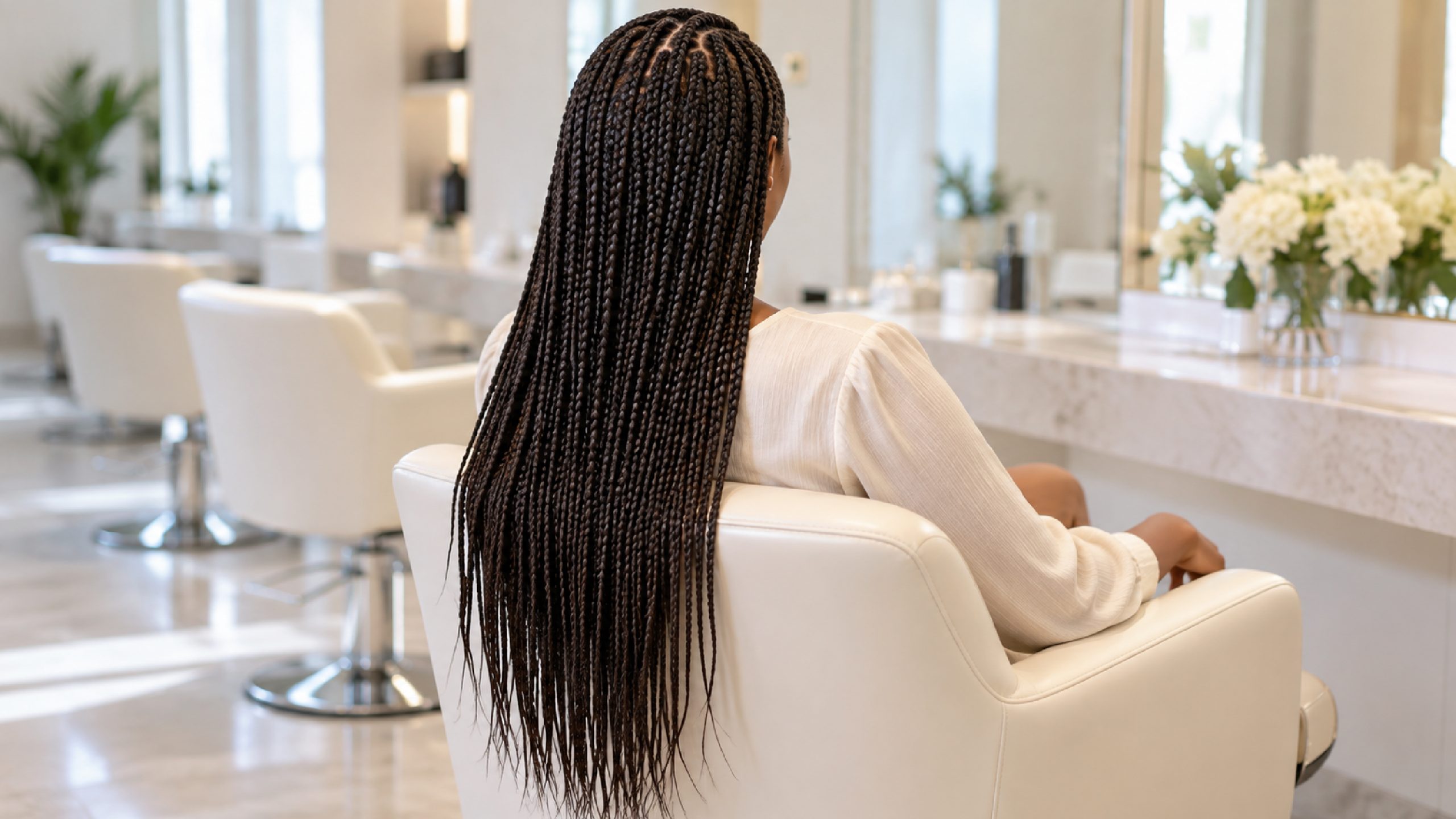
Hair Braiding Dubai: Protective Styles for Every Hair Type
Hair braiding Dubai searches come from a simple need: a style that protects natural hair from heat, humidity and daily styling, and still looks polished for weeks. Whether your hair is fine and straight or tightly coiled, the right protective style can reduce everyday manipulation, help you retain length and simplify your routine.
This guide explains which protective styles suit each hair type, how to look after your scalp and edges, and what to look for in a braiding salon. It comes from the team at Crystal Beauty Lounge, a ladies salon in JLT that has served the community since 2011, and it is informational only. If you would like to see what we offer, you can read about our hair braiding services at our JLT salon.
What Is Protective Styling, and Why Does It Matter in Dubai?
A protective style tucks the ends of your hair away and limits daily combing, heat and friction. Braids, twists and cornrows are the best-known examples. In Dubai, hair also copes with outdoor heat and humidity, dry air conditioning indoors, strong sun, and chlorinated or salty water from pools and beaches.
Done well, hair braiding in Dubai can shield your hair from a lot of that wear. Done badly, with braids that are too tight, too heavy or left in too long, it can cause the very damage you wanted to avoid. That is why matching the style to your hair type and getting the technique right matter more than the name of the style.
Hair Braiding Dubai: Protective Styles Matched to Your Hair Type
There is no single best braid. Curl pattern, strand thickness, density and hair condition all affect what will look good and feel comfortable. Use this as a starting point, then ask a stylist to assess your hair in person.
Straight and Fine Hair
Fine, straight hair is smooth and slippery, so it can be harder for braids to grip. Classic three-strand styles such as French and Dutch braids, or lightweight small braids, tend to work better than heavy installs. If you want extra length or fullness, ask about lighter options, because heavy extensions can strain fine strands.
Wavy Hair
Wavy hair holds braids well and gives a soft, natural finish. Dutch braids, simple cornrow patterns and small braids with a light extension are popular choices. Wavy hair can frizz in Dubai's humidity, so a smoothing product on the ends helps braids stay neat.
Curly Hair
Curls have natural grip, which makes them well suited to braids and twists. These styles also help prevent tangling and shrinkage between washes. Moisture is the priority for curly hair, so plan your braids around a good hydration routine.
Coily and Afro-Textured Hair
Coily hair is naturally prone to dryness and can be fragile where the strand bends, so it often benefits most from protective styling. It can also be more vulnerable to tension damage. The American Academy of Dermatology notes that the shape of the follicle in hair of African descent makes it more likely to be damaged by rough or tight styling. Cornrows, box braids, knotless braids and twists are all common choices. An afro braiding hair salon that understands textured hair will handle sectioning, moisture and tension with extra care.
Colour-treated, relaxed or damaged hair: chemically treated strands are weaker and break more easily under tension. If your hair is bleached, relaxed or recovering from damage, tell your stylist before the appointment so they can choose a gentler, lighter style or suggest waiting.
Popular Braiding Styles at a Glance
Here is a quick comparison of styles people commonly ask about. Suitability always depends on your own hair, so treat this as a guide rather than a rule.
| Style | Often suits | Good to know |
|---|---|---|
| Box braids | Wavy, curly and coily hair of medium to long length | Hair is sectioned into squares, often with extension hair for length and fullness. Smaller sections can mean a heavier install. |
| Knotless braids | Curly and coily hair; those wanting a lighter feel at the root | Extension hair is added gradually, which aims to reduce tension at the base compared with knotted starts. |
| Cornrows | Most textures, including as a base for wigs or extensions | Braids lie flat to the scalp. Thicker sections generally pull less than very thin ones. |
| Feed-in braids | Those who want a natural-looking hairline | Extension hair is fed in gradually along a cornrow for a tapered, seamless start. |
| Fulani braids | Those who want a statement look | A cornrow-based style with braids and, often, decorative accents. Placement and tension still matter. |
| Twists (such as Senegalese or passion twists) | Curly and coily hair | Two-strand styles with a softer look. They still need moisture and regular scalp care. |
| French and Dutch braids | Straight and wavy hair | Three-strand styles worked from the scalp. A good everyday option for shorter-term protection. |
Braids With Extensions: What to Know Before You Book
Many people add extension hair to braids for length, fullness or a specific look. Extensions and wigs can also give your natural hair a rest between styles. The key is weight and tension: extension hair that is too heavy or fitted too tightly places stress on your roots.
If you are researching hair extensions in Dubai or JLT, or comparing the best hair extension salon in Dubai for your needs, ask these questions first:
- Do they start with a consultation about your hair type, length, density and scalp condition?
- Will they explain how the style is fitted and how they manage tension at the hairline?
- Can they advise on the weight and type of extension hair for your hair?
- Do they give clear aftercare and take-down guidance?
- Are the tools and workspace clean, and is the team experienced with your hair texture?
How to Protect Your Edges: Tension, Weight and Timing
Your hairline is one of the first places to show strain from a tight style. Dermatologists at the American Academy of Dermatology advise avoiding hairstyles that pull often, and their American Academy of Dermatology guidance on hairstyles that pull recommends loosening braids, especially around the hairline. They also note that if a style feels painful, it is too tight.
Dermatologists also commonly advise keeping braids in for no more than two to three months at a time, and choosing slightly thicker braids, which pull less than very thin ones. Giving your hair a break between installs helps it recover.
Speak up during or after installation if you notice any of the following:
- Pain, stinging or a burning feeling on the scalp
- Raised bumps, redness or crusting around the braids
- Scalp that looks pulled or lifted (sometimes called tenting)
- Broken hairs or thinning along the hairline
If any of these appear, ask your stylist to loosen or remove the style, and see a dermatologist if symptoms continue.
Braid Aftercare for Dubai's Heat and Humidity
Good aftercare keeps braids neat and your scalp comfortable. Heat makes you sweat, and sweat plus product build-up can leave the scalp itchy. These habits help:
- Keep the scalp clean: cleanse the scalp regularly with a diluted, gentle shampoo, and rinse well so nothing is left behind.
- Moisturise lightly: use light leave-in products on the hair and scalp. Heavy oils and creams can build up and cause flaking.
- Protect at night: a satin bonnet or pillowcase reduces friction and frizz.
- Rinse after swimming: chlorine and salt water dry out hair, so rinse braids after the pool or beach.
- Avoid DIY re-braiding: pulling at regrowth at home adds tension. Let a professional handle touch-ups.
- Plan your take-down: remove braids gently, detangle slowly and follow with deep care. If you are unsure which treatment fits, our guide to hair spa vs deep conditioning explains the difference.
What to Expect at an Afro Braiding Hair Salon in JLT
A professional hair braiding Dubai appointment should feel structured and unhurried. Here is the typical flow you can expect from a good salon:
- Consultation: your stylist reviews your hair type, length, density, scalp condition and lifestyle, and agrees the style, size and length with you.
- Preparation: hair is cleansed, detangled and moisturised so it is ready to be braided.
- Installation: sections are made carefully, with attention to tension and placement, especially at the hairline.
- Finishing and aftercare advice: you leave knowing how to wash, moisturise and protect your style, and when to book your take-down.
At Crystal Beauty Lounge JLT, our hair braiding, afro hair care, extension and wig services are tailored to your hair type and personal style, and our stylists each have at least five years of experience in their field. You can find out more on our hair braiding services at our JLT salon page.
How to Choose a Hair Braiding Salon in Dubai
When you are comparing hair braiding Dubai salons, use this quick checklist:
- Experience with your hair type: ask whether the team regularly works with your texture.
- A real consultation: a good stylist assesses your hair before recommending a style.
- Tension awareness: they should talk openly about comfort, edges and how long to keep the style.
- Hygiene: clean tools, clean stations and freshly prepared hair.
- Clear communication: transparent information about the process, timings and aftercare before you sit down.
- Convenient location: braiding appointments can be long, so easy access and parking help.
Hair Braiding in Dubai: Frequently Asked Questions
Dermatologists commonly advise keeping braids in for no more than two to three months at a time. Your stylist can advise on the right timing for your hair type and style.
Yes, in many cases, but the style needs to be lightweight. Small, light braids or simple three-strand styles are usually gentler on fine strands than heavy extension installs. A stylist should assess your density first.
It depends on the style and the length of your hair. Braids need enough length to hold securely, so a stylist will check your hair in person and suggest suitable options.
Braids are considered protective when they are installed with the right tension and removed on time. Styles that are too tight, too heavy or left in too long can cause breakage and strain the hairline.
Yes, with care. Cleanse your scalp regularly, rinse thoroughly and let your braids dry well. After swimming, rinse out chlorine or salt water to limit dryness.
Book Your Hair Braiding Consultation in JLT
The best hair braiding in Dubai starts with a style that suits your hair type, a stylist who respects tension and timing, and a simple aftercare routine that works in Dubai's climate. Choose a protective style that fits your lifestyle, and give your hair a rest between installs.
Ready to talk it through? book a consultation with the Crystal Beauty Lounge team. We are in the Red Diamond Building, First Floor, F113, JLT, Dubai, and open Tuesday to Sunday, 10am to 8pm. Call or WhatsApp us on +971 56 526 2977.
